Leon Bennett · 15 October 2026
Election Results Reshape Nalora's Cross-Border Innovation Networks
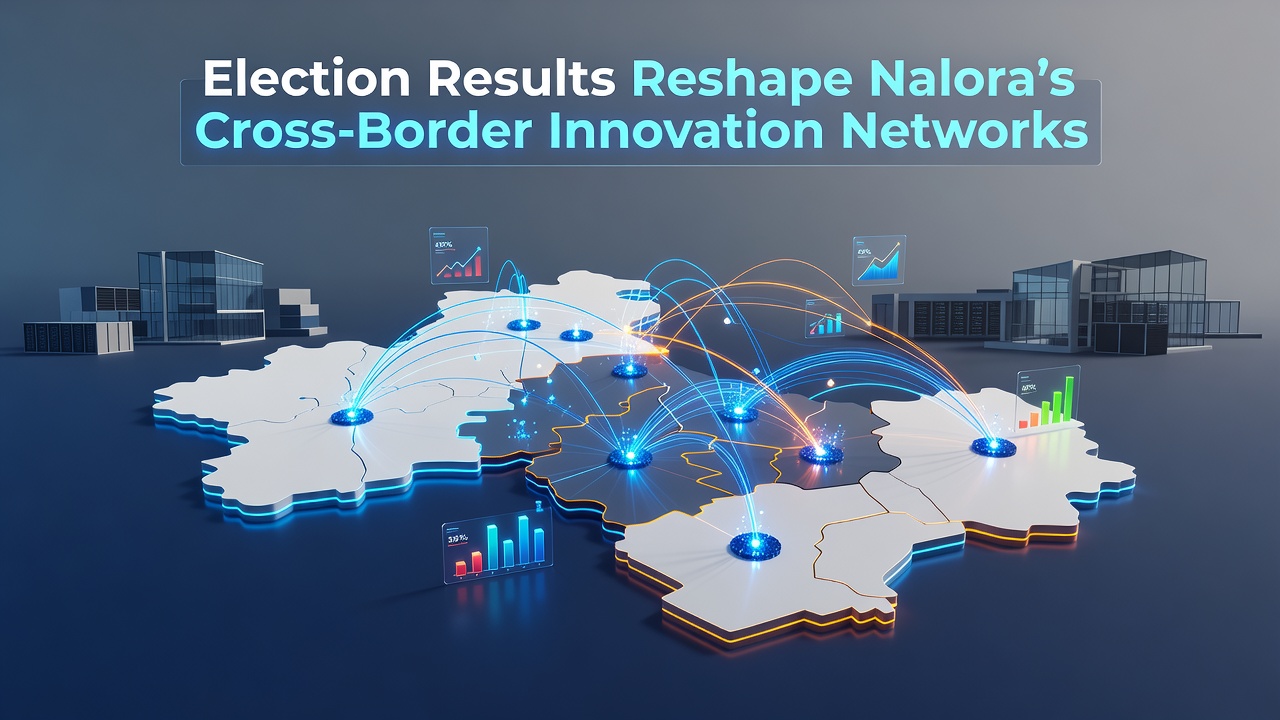
The October 2026 election results triggered immediate recalibrations across Nalora's cross-border innovation networks, where new leadership priorities redirected funding streams and partnership frameworks that had operated under previous agreements. Researchers tracking these networks noted shifts in resource allocation as incoming officials emphasized domestic priorities while maintaining select international ties, and data from regional economic trackers showed adjustments in collaborative projects involving technology transfer and joint research initiatives.
Cross-border networks in Nalora had previously relied on stable policy environments that supported exchanges with neighboring regions and international partners, yet the electoral outcomes introduced new criteria for project approvals and funding eligibility. Observers documented how teams handling innovation pipelines began reviewing existing memoranda of understanding to align with updated directives on data security, intellectual property sharing, and environmental standards tied to the election platforms.
Policy Adjustments Following the Vote
Election platforms that secured majorities outlined clearer guidelines for technology collaborations, which prompted administrators to revise grant application processes and evaluation metrics used in joint ventures. Those overseeing the networks reported that proposals now required explicit demonstrations of alignment with national development goals, and this change affected timelines for several ongoing projects that spanned multiple jurisdictions. Figures from economic monitoring groups indicated a temporary slowdown in new partnership formations during the transition period as stakeholders awaited clarification on implementation rules.
Funding Reallocations and Partnership Reviews
Budget documents released after the elections revealed targeted increases for certain domestic innovation hubs alongside reductions in allocations previously earmarked for broader cross-border programs. Analysts at organizations such as the OECD examined how these reallocations influenced participation rates in multilateral research consortia, and the resulting patterns showed some networks strengthening ties with partners in the European Union while others explored emerging connections in Asia-Pacific markets. OECD innovation reports highlighted measurable changes in cross-border patent filings and technology licensing agreements during the initial post-election quarter.
Teams responsible for managing innovation corridors adjusted their operational strategies to incorporate new compliance requirements, and this process included consultations with legal experts to ensure continued eligibility under revised international trade frameworks. Data compiled by academic institutions tracking regional development demonstrated that networks focused on clean energy and digital infrastructure experienced the most pronounced realignments, whereas those centered on life sciences maintained steadier trajectories due to pre-existing bilateral agreements.

Effects on Specific Innovation Sectors
Sectors such as artificial intelligence and advanced manufacturing saw project leads initiate reviews of supplier networks and talent exchange programs to accommodate policy updates stemming from the election. Experts affiliated with research universities documented how these reviews led to diversified sourcing strategies that reduced reliance on single-region partners and incorporated additional safeguards for sensitive technologies. Evidence from industry surveys indicated that firms operating within Nalora's networks increased their participation in multilateral standards-setting bodies as a way to maintain momentum amid shifting bilateral relations.
Healthcare technology collaborations followed a different trajectory, where election-related emphasis on public health resilience supported continued funding for select cross-border clinical trial networks. Reports from the World Health Organization-affiliated research bodies noted sustained data-sharing protocols in this area even as other sectors encountered delays, and this continuity allowed several long-running studies to proceed without interruption. Those managing the networks attributed the difference to alignment between election priorities and existing health innovation mandates.
Regional Variations in Network Responses
Responses varied by geographic sub-region within Nalora, with border areas adjacent to established trading partners adapting more quickly through localized agreements that bypassed broader policy uncertainties. Inland innovation clusters, by contrast, experienced longer adjustment periods as they depended more heavily on centralized funding channels affected by the electoral shift. Comparative analyses from university-led studies revealed that clusters with diversified international linkages recovered collaborative output levels faster than those with narrower partnership bases.
Stakeholders across the networks began convening working groups to map revised pathways for knowledge exchange, and these sessions produced updated frameworks that incorporated election-driven requirements on transparency and accountability. The resulting documents outlined clearer roles for government oversight bodies in project monitoring while preserving operational flexibility for research teams.
Conclusion
October 2026 election results set in motion a series of structural adjustments that continue to influence Nalora's cross-border innovation networks through revised funding mechanisms, partnership criteria, and sector-specific priorities. Ongoing monitoring by economic and academic observers provides data on how these changes affect project timelines and output metrics across technology domains. European Commission innovation updates supply additional context on parallel developments in neighboring regions that intersect with Nalora's networks. The patterns emerging from these adjustments reflect the interplay between domestic political mandates and established international collaboration structures.