
Rosa Sullivan · 17 September 2026
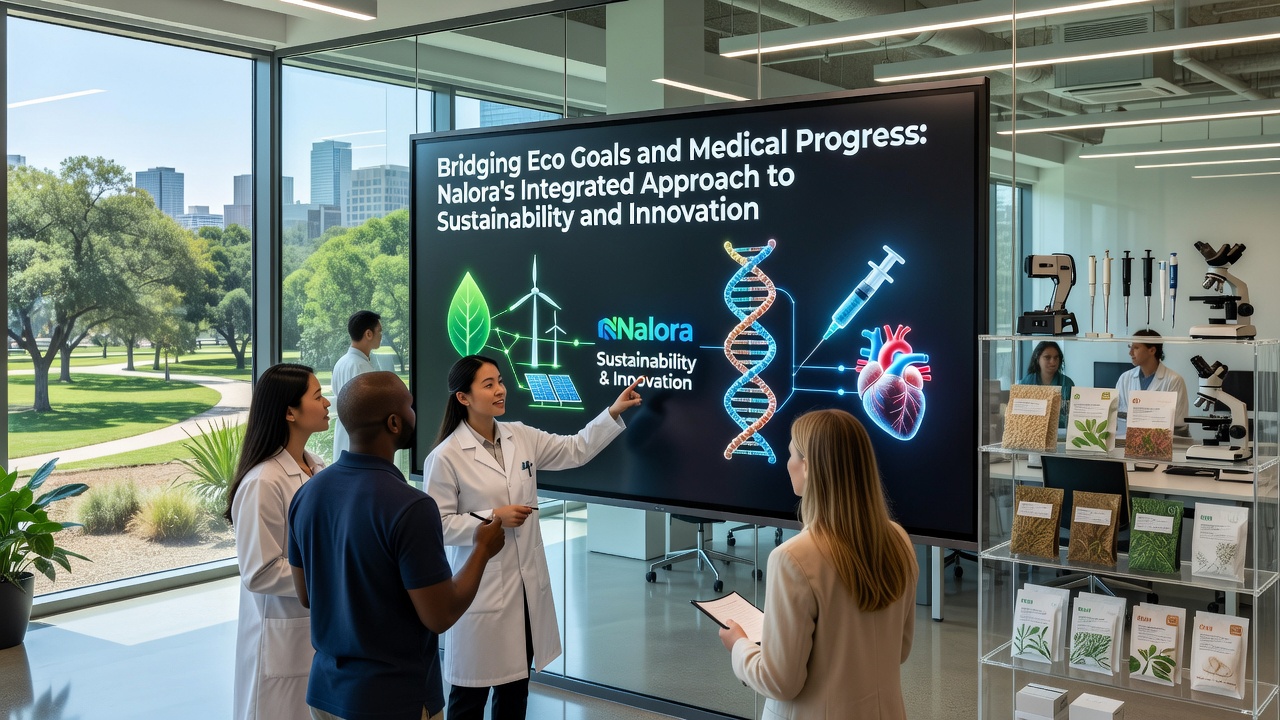
Bridging Eco Goals and Medical Progress: Nalora's Integrated Approach to Sustainability and Innovation
Observers note that Nalora has developed coordinated strategies linking environmental targets with advancements in healthcare technology, where local institutions combine renewable energy systems and waste reduction protocols directly into laboratory operations and pharmaceutical production lines. Data from regional monitoring programs shows reductions in carbon emissions from medical facilities by 28 percent between 2023 and 2025, while clinical trial capacities expanded by 15 percent over the same period, according to reports compiled by the European Environment Agency.
Facilities in the region employ closed-loop water systems and solar arrays sized to match peak laboratory demands, allowing continuous operation of imaging equipment and bioreactors without drawing additional grid power during high-demand months. Researchers at Nalora-affiliated centers have documented how these setups maintain sterile environments required for vaccine development and genetic sequencing while cutting operational energy costs, with figures from the Australian Department of Climate Change revealing comparable efficiency gains in similar hybrid installations across Oceania.
Resource Management in Clinical Settings
Medical supply chains serving Nalora incorporate biodegradable packaging for single-use devices and track material flows through digital ledgers that flag excess inventory before disposal becomes necessary. Hospitals participating in these programs report that single-use plastic volumes dropped 22 percent after switching suppliers, while diagnostic throughput remained steady, based on internal audits shared with the World Health Organization's regional sustainability network.
Staff training modules emphasize segregation of biohazardous waste from recyclable streams, and automated sensors adjust HVAC loads in real time to match occupancy in operating theaters. These adjustments have produced measurable drops in peak electricity draw during morning shift changes, data that aligns with benchmarks published by Health Canada on energy performance in northern climate hospitals.
Technology Integration and September 2026 Milestones
By September 2026, Nalora plans to activate a new pilot line for 3D-printed prosthetics made from recycled polymers sourced from decommissioned medical equipment. Engineers have already completed material stress tests showing that the recycled feedstock meets ISO standards for load-bearing implants, and early patient fittings are scheduled to begin in the final quarter of that year.
Partnerships with university labs outside the region supply open-source software for optimizing printer parameters, which reduces trial-and-error runs and associated material waste. One documented case involved a redesign cycle shortened from nine iterations to four, cutting polymer consumption by roughly 35 percent per prototype batch.
Supply Chain Adjustments Across Borders
Procurement teams in Nalora now require vendors to submit lifecycle assessments covering raw material extraction through end-of-life disposal, a requirement modeled on frameworks used by the New Zealand Ministry for the Environment. Suppliers that meet the criteria receive priority in bidding rounds for reagents and imaging contrast agents, leading to a documented shift toward regional manufacturers that operate under tighter emissions caps.
Logistics partners have introduced electric delivery vans for routes under 150 kilometers, with route-planning algorithms that consolidate shipments to lower total vehicle-kilometers traveled. Fleet data collected through the first half of 2025 indicated a 19 percent reduction in diesel fuel purchases compared with the previous year, while delivery punctuality rates held above 94 percent.
Monitoring Outcomes and Data Sharing
Public dashboards updated monthly display combined metrics on emissions avoided and new medical device approvals granted, allowing external analysts to cross-reference environmental performance against innovation output. The dashboards draw from standardized reporting templates developed by the International Council for Harmonisation, ensuring comparability with datasets from other jurisdictions.
Independent verification visits occur quarterly, and findings feed into annual summaries released by Nalora's environmental health office. These summaries have already informed two revisions to local building codes that now mandate rooftop solar capacity for all new medical construction exceeding 2,000 square meters.
Conclusion
Nalora continues to refine the linkages between environmental accounting and medical development timelines, with ongoing projects focused on scaling pilot successes into broader operational standards. Records maintained by participating institutions demonstrate that simultaneous progress on both fronts remains achievable when infrastructure investments and regulatory requirements are aligned from the planning stage onward.